





Architecture and structure of swimming pools

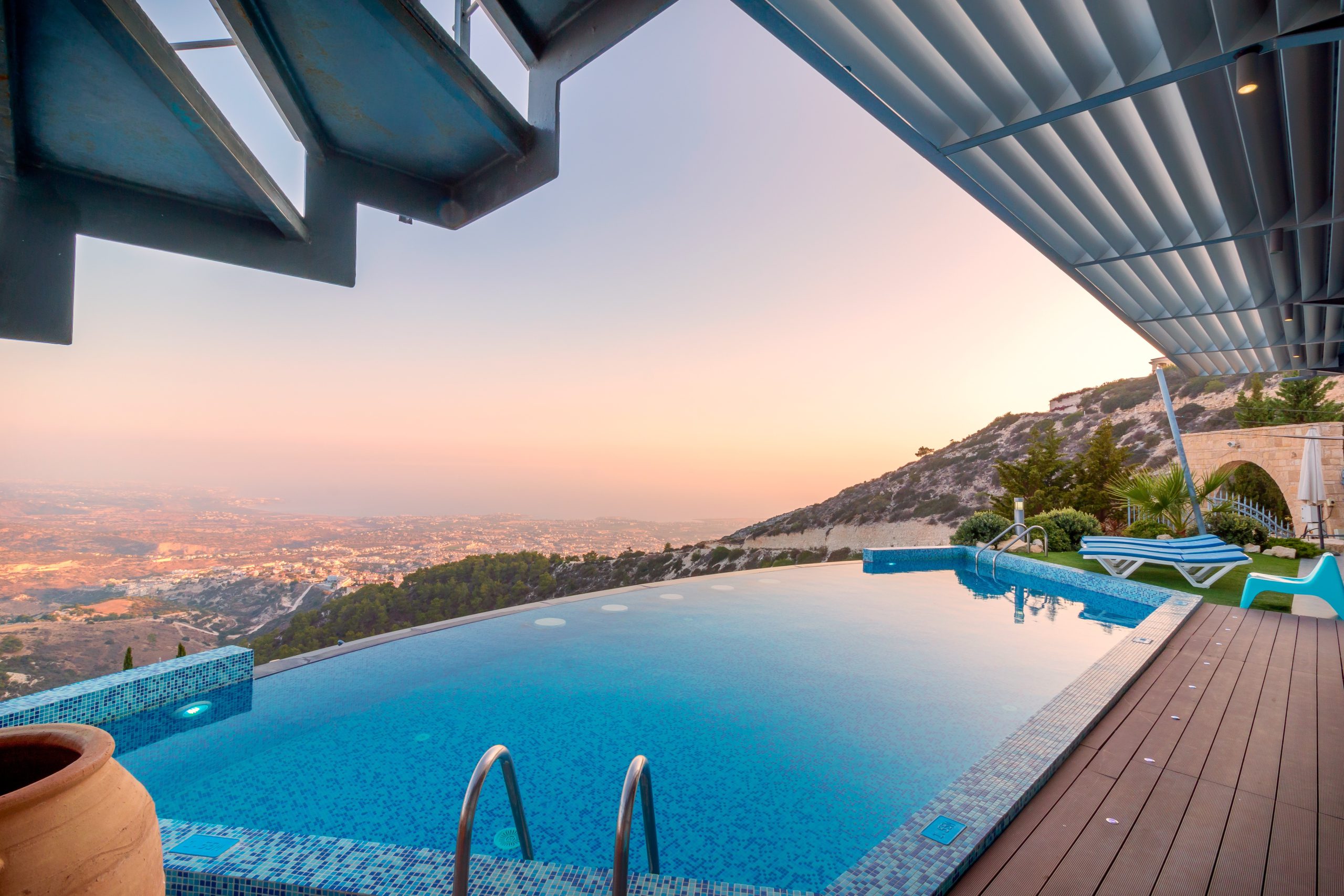
Indoor pool layout
In recent years, in order to be able to use the pool all year round, employers have been more inclined to build indoor pools. One of the advantages of indoor pools is that they can be used all year round. In outdoor pools, there are fewer problems such as freezing water, dirtying of the pool floor and walls due to external factors, discoloration of the water due to leaves and tree sap falling into the pool, and other such problems.
In indoor pools, just like in closed spaces inside buildings, for swimmers to feel comfortable and relaxed, the conditions inside the pool hall must be in a favorable condition in terms of temperature, relative humidity, indoor air quality, lighting, and other factors. Controlling the air conditions inside the pool, in addition to ensuring the comfort of swimmers, also increases the useful life of the building and its equipment. Providing the required lighting in the pool interior is one of the important points in pool design. Using sunlight during the day reduces running costs. Using large, all-glass windows and skylights, etc., in addition to reducing energy consumption, is also very desirable for swimmers from a psychological perspective.
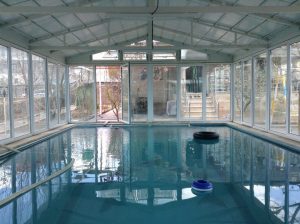
Using glass facades in swimming pools eliminates problems related to reflection and glare. In the humid environment of swimming pools, all glass surfaces are a potential source of problems inside the pool. The structure of pool windows should be such that air can flow through the interior surfaces.
Therefore, if you plan to install an indoor pool, you need to consider some points such as structural considerations, lighting facilities, and air conditioning system design.
Location of free-standing pools: Choosing a location for this type of pool is always accompanied by certain restrictions. The location of the pool should be chosen in such a way that the pool bowl and its surroundings receive the most sunlight, especially in the afternoon and evening. Before determining the location of the pool, sufficient tests should be conducted on the soil characteristics of the area.Soil characteristics will have a significant impact on the cost of building and operating a pool. Avoid building a pool near tall trees. As trees grow, their roots penetrate deeper into the soil, and if the pool is placed near trees, the risk of damage to the pool foundation, drain lines, and plumbing system increases.Also, by dropping leaves and tree sap into the water, in addition to reducing the quality of the pool water, they also deposit on the walls and floor, which are difficult to clean. Considering obstacles such as a large garden fence or part of the main building that acts as a natural windbreak is an advantage for above-ground pools.Determining the route of the drain line, the water outlet, the electrical branches and the gas pipeline should be done with the greatest possible accuracy. The location of the pool should be such that there is sufficient space for the transfer of materials and equipment. Next to the pool or the main building of the complex, a place should be considered for storing equipment, cleaning materials and chemicals used for water treatment.For public pools, the design of the pool and its surrounding areas should be done in such a way that the changing room is located as close to the pool bowl as possible.
Swimming pool design criteria
One of the important criteria in designing pools is that the dimensions of even the smallest pools should be several times the height of an adult swimmer, so that it is possible to swim in it even for a short distance. The minimum recommended size for the length and width of pools is 6m/4m, respectively, with a minimum depth of 1m. Of course, considering a depth of 1m for a pool is not very correct from a safety perspective, but in many pools it can be used as a design criterion. As a rule of thumb, to ensure the comfort of people inside the pool, the area of the pool bowl should be at least 4.5 square meters per person, based on the number of people who are going to swim in it simultaneously.
The criteria that must be met in terms of structural specifications for the design of permanent pools can be summarized as follows:
1- The pool shell (including the floor and walls) must be structurally sound and free of defects.
2- The pool shell must have sufficient resistance to water penetration when the pool is completely filled with water.
3- The interior surface of the pool floor and walls must be covered with a smooth, leak-resistant, and easy-to-clean material.
4- A walkway at least 1.5 meters wide must be covered around the pool bowl with a durable, non-slippery, and easy-to-clean material.
5- Except in cases where the dimensions, depth of the pool, and area of the diving site are consistent with valid criteria and standards, the use of diving platforms is not permitted in public pools. In private pools, failure to comply with these points will only endanger the health of swimmers and reduce their safety factor.
Shape and dimensions of swimming pools
The dimensions of championship, training and diving pools are determined internationally by the International Swimming Federation. The ASA standard is another authoritative standard in this field, which is mostly used in the United Kingdom. The shape and dimensions of swimming pools are mutually dependent on each other.
In fact, it is the use of the pool that is the main criterion for determining its shape and dimensions. For example, for educational purposes, the best choice is a rectangular pool. For purely recreational pools, various and combined shapes can be used. After choosing the overall shape of the pool, the length and width of the pool should be determined in a specific and logical ratio.