





Main equipment of the swimming pool engine room

1. Purification pump
The main equipment of the pool engine room, the filtration pump, is the beating heart of the pool water circulation system. This device, by creating a continuous flow, directs water from the pool to the filters and other equipment and, after purification, returns it to the pool. Choosing the right pump according to the volume and dimensions of the pool plays a vital role in the proper functioning of the filtration system. Pool pumps are available in various types of single-phase and three-phase, with different powers and various brands on the market. The useful life of a standard pool pump with proper maintenance can reach more than 10 years.
2. TREATMENT FILTER
Filters are responsible for removing suspended particles and physical contaminants from water. Types of filters used in pools include:
Sand filter: Using different layers of silica, it absorbs suspended particles in the water and returns clear, clean water to the pool. Choosing the right filter size is done based on the volume of pool water and its circulation speed. Regular backwashing and timely replacement of filter material play an important role in its efficiency.فیلتر Cartridge: Has replaceable cartridges and is easier to maintain than sand filters. These filters are suitable for small to medium pools.
Diatomaceous earth filter: With high filtration accuracy, but higher maintenance costs. These filters are suitable for pools that require very precise filtration.
3. chlorine
Chlorine is used to disinfect and sanitize pool water. There are different types of chlorine:
Linear Chlorine: Place chlorine tablets in the water path to gradually dissolve in the water and disinfect it.
Chlorine injection pump: Injects a specific amount of liquid chlorine into the pool system. The amount of chlorine injection depends on the type of use and its sensitivity and must be in accordance with the specific instructions.Salt Chlorination: Uses salt electrolysis to naturally produce chlorine and add it to the water. This method is more suitable for people who are sensitive to chlorine.
4. heat exchanger
Heat exchangers are used to heat pool water. These devices increase the water temperature by transferring heat from a hot fluid to the pool water. There are different types of exchangers:
Gas exchangers: They heat the water using natural or liquid gas.
Electric exchangers: They heat the water using electrical elements. These types of exchangers are suitable for small and medium-sized pools.
Solar exchangers: They heat the water using solar energy. This method is suitable for saving energy.
Pool accessories and safety equipment
1. SKIMMER
Skimmers are used to collect surface debris such as leaves, insects, and grease from the surface of the pool water. These devices create a surface current that directs the debris toward the filter. The number of skimmers required depends on the surface area of the pool.
2. GUTTER
GUTTERS are installed around the edges of the pool and are designed to collect and channel excess water to prevent it from overflowing and causing problems such as slipping around the pool. The water collected by the grills enters a filtration system, where contaminants and suspended particles are removed and clean water is returned to the pool. Grilles are usually made of plastic or stainless steel, which are resistant to moisture and chemicals.
3. ladder
Pool ladders are designed to allow swimmers to safely enter and exit the pool. These ladders are usually made of stainless steel and are available in a variety of step sizes.
4. MAIN DRAIN
Skimmers are used to suck water from the bottom of the pool and direct it to the pump and filter. Skimmers are usually placed in the deep part of the pool, and two skimmers are standard in each pool.
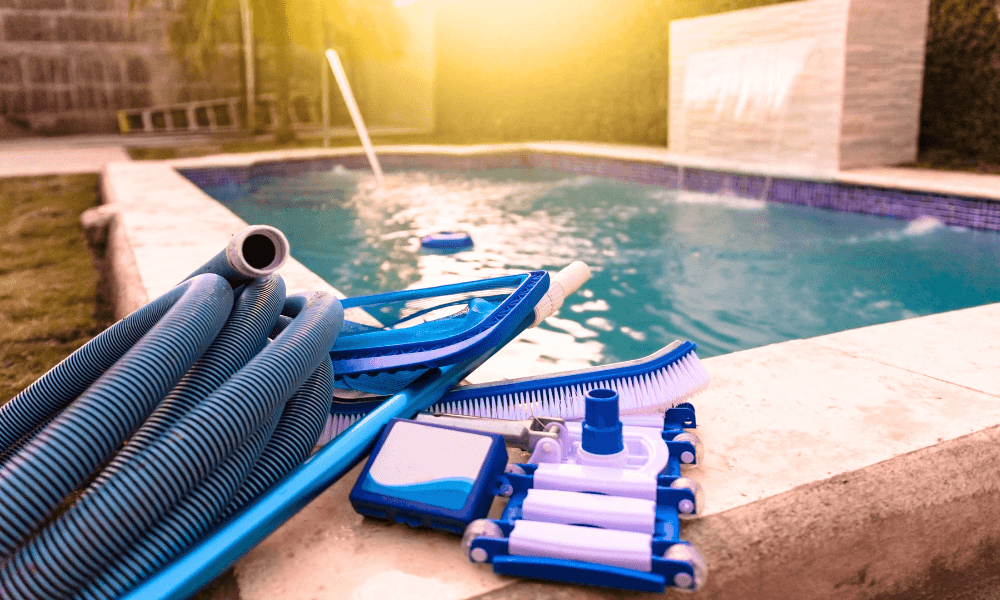
5. Hose, broom handle and broom head
This equipment is used to clean the floor and walls of the pool. The hoses should be of higher quality to withstand water pressure and chemicals. The broom handle and head should also be designed to allow access to these places.
6. BRUSH
Brushes are used to clean the floor and walls of the pool from sediment and algae. Regular use of brushes helps prevent the formation of algae and unsightly stains.
7.thermometer
Thermometers are used to measure the temperature in the pool water. It is important to keep the pool and hot tub water constant and prevent it from rising or falling. Typically, the pool water should be between 26 and 28 degrees Celsius, and the hot tub water temperature should be a maximum of 40 degrees Celsius.
8. LEAF CATCHER
Leaf catchers are used to collect leaves and large foreign objects from the water and even the bottom of the pool. Pool and hot tub leaf catchers come in two main models: flat mesh and deep mesh.
9. POOL LIGHTING
Pool lights are used to illuminate and enhance the beauty of a pool. These lights should be waterproof and can be recessed or surface mounted.
Advanced pool water disinfection equipment
1. Ozone machine
Ozone is a powerful oxidizer for disinfecting water and killing bacteria. One of the advantages of using ozone over chlorine is that it has no side effects or harm to people. The ozone generator takes oxygen from the air and converts it into the unstable ozone molecule with the help of an ultraviolet lamp. It then injects this substance into the pool water. When ozone enters the water, it oxidizes, killing all bacteria and water contaminants and releasing oxygen. Using this device reduces the need for chlorine and is environmentally friendly.
2. UV LAMP
Using an ultraviolet (UV) lamp is another method of disinfecting pool water. In this method, pool water is exposed to ultraviolet rays by passing through a closed chamber of the lamp and is disinfected. The effectiveness of using a UV lamp depends on the circulation